
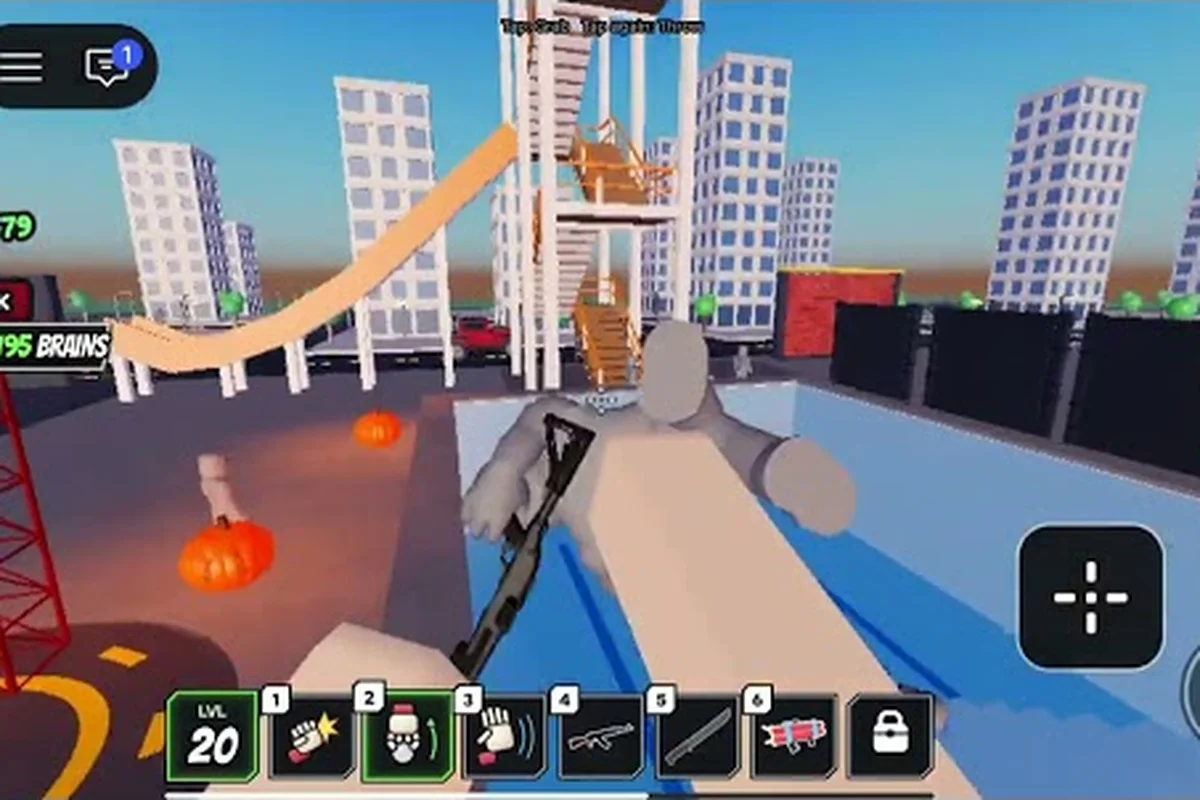
Ragdoll reality dummy damage varies by hit location, so a leg strike can trigger a limping animation while damage to the head may cause bleeding, dismemberment, or physical separation of that part from the body. The ragdoll reality dummy hitbox therefore matters: aim for a specific body zone, then observe how the AI reacts to the staggered animation and remaining health. Testing the torso, arms, and head separately also makes it easier to identify which damage effects reliably interrupt a target without producing the same result elsewhere.
Dummy Damage: What the Impact Point Changes
Ragdoll reality dummy damage is location-based: the impact point determines how a ragdoll reality dummy reacts. A leg hit may produce a limp, while an arm hit can make that limb hang and lead the target to clutch the wound. This matters because repeated attacks at the same spot create clearer physical results than random hits spread across the body.
The official Ragdoll Reality game page describes dummies that stagger, recover, bleed, run away, and get back up. It also confirms that limbs can detach and that a dummy can be grabbed, pushed, or thrown. Because ragdoll reality dummy health is not presented as a conventional visible bar, the body part and impact location are more useful indicators than a single number.
| Damage target | Typical visible result | Practical test value | Published health value |
|---|---|---|---|
| Leg | Limp, reduced running, or crawling | Tests mobility impairment | Not published |
| Arm | Hanging arm or clutching behavior | Tests upper-body control | Not published |
| Torso | Stagger, knockdown, or bleed | Tests balance and recovery | Not published |
| Head | Strong reaction or knockdown | Tests impact concentration | Not published |
| Detached limb | Bleeding and reduced attachment | Tests dismemberment | Not published |
These outcomes are more useful for experimentation than assumptions about hidden statistics. A player can use the same ragdoll reality dummy as a controlled target, deliver one precise strike, and record what changes. Community reports commonly describe dummies as reactive opponents rather than passive training objects, so an unattended target may move, recover, or resist after being hit.
Dummy Hitbox: Body-Part Targeting Guide
The ragdoll reality dummy hitbox is best understood as a set of meaningful impact zones. The game does not publish exact collision dimensions, mass values, gravity settings, or joint limits, so precise technical numbers would be misleading. Instead, target the visible body region and observe the resulting animation, movement change, and physical recovery.
A controlled one-hit test helps separate ragdoll reality dummy damage from ordinary knockback. First, let the target finish any previous movement, then aim squarely at one region. After the strike, watch three things: immediate posture, whether the target can stand, and whether the affected limb continues functioning. That sequence is more informative than judging only by the speed of the fall.
| Zone | How to aim | What to record | Likely result |
|---|---|---|---|
| Head | Center the crosshair on the head | Head snap, fall direction, recovery time | Strong stagger or knockdown |
| Chest | Aim between the shoulders | Ribcage motion and grip response | Torso impact and possible stagger |
| Abdomen | Aim below the chest | Fold, step loss, and balance | Center-body displacement |
| Upper arm | Hit above the elbow | Arm position and hand response | Arm hangs or target clutches it |
| Forearm | Hit below the elbow | Wrist and elbow motion | Reduced arm control |
| Thigh | Strike the upper leg | Stride length and knee stability | Limp or crawling tendency |
| Shin | Target below the knee | Foot placement and dragging | Severe walking impairment |
| Back | Strike behind the shoulders | Direction of the fall | Greater chance of backward knockdown |
This targeting map also explains why a ragdoll reality dummy may react differently after repeated impacts. A damaged leg can alter balance, which changes the direction of a later torso hit. The second attack then lands under different conditions, making the ragdoll reality dummy health state harder to isolate unless the player resets the test between attempts.
For more target-zone comparisons, the guide to five Ragdoll Reality dummy stumble zones expands on how a body target can change balance and movement after impact. In practical tests, compare a head strike with a shin strike: the head is more likely to produce a strong stagger or knockdown, while the shin can impair foot placement and create a dragging step even when the dummy remains upright. Because the game does not expose exact collision dimensions or joint limits, these observed differences are more useful than assuming a fixed damage value for every body part.
Dummy Health: What the Game Reveals
There is no confirmed numerical ragdoll reality dummy health value in the official information available. The practical answer is that each ragdoll reality dummy behaves like a body made of independently affected parts. A leg can cease supporting normal movement, an arm can hang, and a severe impact can cause a fall without revealing a universal health threshold.
This distinction prevents a common mistake: assuming every ragdoll reality dummy has one standard endurance level. The visible condition is the sum of several reactions. A target that is still standing after a leg hit may not be unaffected, and one that gets back up may still retain a limp or bleeding wound.
| Observation | What it indicates | Confidence level |
|---|---|---|
| Target staggers but rises | Temporary balance disruption | Confirmed by official game information |
| Affected leg drags or causes a limp | Local mobility impairment | Confirmed by official game information |
| Target holds an injured arm | Localized pain response | Confirmed by official game information |
| Bleeding begins | Wounds are represented physically | Confirmed by official game information |
| Limb detaches | Severe localized result | Confirmed by official game information |
| Exact damage per punch | Numerical value | Not published |
| Number of hits before defeat | Numerical threshold | Not published |
| Universal health bar for every body part | Stat system | Not published |
The official page also identifies a graveyard conversion system, where a thrown dummy can become a zombie. This makes ragdoll reality dummy health more than a knockout concept: the target’s condition can affect what happens after a grab, throw, or fight. The same body that receives a leg wound may later be moved into a new role within a wave-survival scenario.
When comparing a ragdoll reality dummy with another dummy type, the overview of Ragdoll Reality dummy types and reactions is more reliable than assuming every target shares identical movement and resistance behavior. For example, a target can stagger and rise, drag an injured leg, hold a bleeding arm, or lose a limb, yet the game does not publish a universal damage-per-punch value or a fixed hit count before defeat. The official observations therefore support comparing physical reactions and hitboxes rather than treating a standard health bar as a confirmed mechanic.
Dummy AI: Reactions, Recovery, and Combat Behavior
Ragdoll reality dummy ai is not described through conventional intelligence statistics. Instead, the official game information indicates that dummies can stagger, fight back, run away, recover, and stand again. That behavior makes timing as important as aim because an unguarded target may react after the first impact and alter the next opportunity.
A useful combat sequence separates the test into three phases: strike, observe, and respond. After the first hit, give the target a moment to reveal its reaction. If it remains active, reposition rather than delivering an immediate second strike. If it falls, approaching too closely can still expose you to retaliation because a downed ragdoll reality dummy can rise again.
| Dummy behavior | Likely tactical response | Measurement goal |
|---|---|---|
| Staggers from a leg strike | Circle away from the compromised side | Record whether the limp persists |
| Holds an injured arm | Redirect attacks toward balanced areas | Compare movement after torso impact |
| Runs away | Cut off escape or let it stop to observe | Test reaction persistence |
| Gets back up | Maintain distance and reset your aim | Measure recovery |
| Fights back | Block, evade, or use the grab interaction | Test retaliation after injury |
| Becomes a zombie after graveyard conversion | Treat it as a new combat target | Compare speed and behavior classes |
The graveyard adds three published speed classes: slow, normal, and fast. It also includes chase, pounce, and bite behavior, plus an infected state for a bitten dummy. A Horde button starts a wave-survival mode, although exact zombie health, bite damage, and wave population are not published.
Because the behavior is reactive and physical, community experience is particularly useful for identifying animations and recovery patterns, but community reports should not be treated as official damage numbers. The first-session basics for Ragdoll Reality on Roblox can help establish movement and combat controls before conducting precise target tests.
Practical Dummy Damage Tests
Accurate ragdoll reality dummy damage testing requires a repeatable routine. Select one target, begin from a neutral position, and avoid changing your attack type between trials. If your goal is to learn about ragdoll reality dummy health, change only one variable at a time: target zone, impact direction, or attack strength.
A practical four-step test works well because Ragdoll Reality damage often reveals itself through the dummy’s hitbox, balance, and movement rather than a visible health bar. For example, compare a torso strike with a leg strike of similar intensity: if only the leg trial produces a persistent drag, that contrast points to lower-body impairment rather than a general ragdoll health loss. Recording the target zone, attack type, and recovery behavior keeps each trial comparable.
-
Reset the position. Place the target in an open area with room to stagger or fall.
-
Choose one body zone. Record the head, torso, arm, or leg rather than mixing hits.
-
Deliver one clean strike. Watch the immediate impact instead of attacking continuously.
-
Record the result. Note stagger, limp, bleeding, arm control, knockdown, and recovery time.
| Test goal | Preferred target | Best comparison | Information gained |
|---|---|---|---|
| Test balance disruption | Leg or shin | Torso hit of similar intensity | Mobility versus center-body reaction |
| Test limb control | Upper arm or forearm | Leg hit of similar intensity | Local versus lower-body impairment |
| Test knockdown | Head or upper torso | Weak leg strike | Direction and recovery behavior |
| Test persistence | Any stable limb zone | Repeated identical impacts | Whether reaction weakens or changes |
| Test physical manipulation | Full body or reachable limb | Uninjured dummy | Effect of prior damage on grab or throw |
Keep notes simple. Record the target zone, attack type, immediate reaction, movement after ten seconds, and whether the dummy recovered. “Limping and rose slowly” is more useful than “weak hit,” while “right leg dragged after the strike and the target still pursued” captures a result that hidden health values would miss.
For tests involving dismemberment, the dedicated guide to Ragdoll Reality limb-separation techniques explains how to approach the mechanic. A limb that separates changes the remaining hitbox and can alter balance, so separate it from ordinary leg-damage trials unless the goal is to examine cumulative effects.
Dummy Damage and Dismemberment
Dismemberment is part of the same location-based system, but it represents the most extreme outcome for a targeted area. The official page confirms that limbs can detach, and the body reacts through bleeding and altered movement. This is why ragdoll reality dummy damage should be evaluated as a physical chain rather than a simple accumulation of hit points.
When a limb separates, ask four practical questions. Can the dummy still run, does its balance change, does it clutch the wound, and can it recover enough to fight? The answers reveal more than the separation event alone. A detached leg may make the remaining body crawl, while an arm separation can reduce its ability to grab, block, or hold itself upright.
| Event | Immediate result | Follow-up observation | Likely experimental value |
|---|---|---|---|
| Light leg impact | Limp or slower stride | Test recovery and balance | Confirms local mobility effect |
| Severe leg impact | Knockdown or dragging | Check whether crawling occurs | Shows a stronger impairment chain |
| Arm impact | Arm hangs or is clutched | Watch grip and guard behavior | Tests upper-limb control |
| Arm separation | Limb detaches and bleeding appears | Test balance and interaction | Measures structural effect |
| Torso impact | Stagger or knockdown | Track rise and pursuit | Tests balance disruption |
| Full-body throw | Target lands in a new position | Test immediate and delayed reaction | Combines impact with physics |
A throw can complicate a controlled hitbox experiment because floor contact may create additional damage. Keep the landing area clear, record the impact position, and avoid attributing every delayed reaction to the initial strike. If the goal is dismemberment, compare the same body zone across separate targets rather than repeatedly striking one already-damaged body.
The limb-tactics guide for knocking out dummies provides a useful next step for turning location-based observations into a fuller knock-out strategy. The important distinction is that a movement-impairing wound and a dismemberment result are separate observations, even when they occur in the same session.
Reading Dummy Results Without Hidden Stats
The most reliable interpretation of ragdoll reality dummy damage relies on visible evidence. The official material does not publish a health total, body-part multipliers, exact dismemberment threshold, or a guaranteed number of hits for defeat. Anyone presenting precise values for these mechanics would be going beyond confirmed information, so this guide separates visible behavior from community interpretation.
Use a simple evidence ladder, starting with visible animation and body-part effects, then adding reproducible player tests for reaction timing, stagger duration, and limb detachment. For example, compare identical strikes against a standing ragdoll reality dummy while recording whether the impact produces a limp, clutching arm, or knockdown; treat differing results as context-dependent rather than proof of a fixed damage threshold. This approach connects ragdoll reality dummy hitbox observations to observable ragdoll reality dummy damage without mistaking community estimates for a published health system.
-
Confirmed: The target visibly reacts at the impact point.
-
Confirmed: A leg injury can produce a limp or crawling movement.
-
Confirmed: An arm injury can produce hanging or clutching behavior.
-
Confirmed: Wounds can bleed, and limbs can detach.
-
Confirmed: Dummies can stagger, retaliate, flee, recover, and rise.
-
Not published: Numerical health, damage thresholds, and limb multipliers.
-
Not published: Exact zombie health, bite values, and wave counts.
Community experience is useful for comparing animations, timing, and combinations that are difficult to capture in official text. However, community reports may vary by platform, patch, or test setup. Label them as reported observations and compare repeatable video or note evidence whenever possible.
| Claim | How to treat it | Reason |
|---|---|---|
| A leg strike makes the target limp | Confirmed behavior | Listed in official game information |
| A body part can separate after extreme trauma | Confirmed behavior | Listed in official game information |
| Every punch has a fixed damage value | Unsupported | No official value is published |
| Weak attacks always cause knockdown | Unsupported | Reaction depends on impact and context |
| Converted zombies have fixed health classes | Unsupported for numbers | Speed classes are published, exact health is not |
| Player testing can refine timing | Reasonable method | Community reports can help, but values remain unconfirmed |
This approach keeps ragdoll reality dummy health analysis honest by tying every conclusion to observable behavior rather than a hidden meter. For example, a player can compare how the same ragdoll reality dummy hitbox reacts to a leg strike, an arm strike, and repeated attacks, noting whether the dummy limps, clutches an injured limb, enters stagger, or rises again. Because ragdoll reality dummy AI can retaliate, flee, and recover, a knockdown should not automatically be counted as defeat. These documented patterns help compare ragdoll reality dummy damage across encounters without mistaking a temporary animation state for a fixed health threshold.
Frequently Asked Questions
Does Ragdoll Reality have a visible dummy health bar?
The official game information does not describe a standard numeric health bar for dummies. A target’s condition is communicated through physical reactions such as staggering, limping, clutching an injured arm, bleeding, dismemberment, and recovery. Because exact ragdoll reality dummy health values are unpublished, careful observation is more reliable than assuming a fixed hit-point total.
What body part causes a Ragdoll Reality dummy to limp?
Leg damage is the clearest cause of impaired movement. The official page describes a leg hit as capable of leaving the dummy limping or crawling, while arm impacts can make an arm hang or prompt the target to clutch the wound. Repeatable testing should isolate the leg area and record whether the altered stride persists after the initial impact.
Can every part of a Ragdoll Reality dummy take damage independently?
The game presents the body as separate impact targets, and each region can produce a different physical result. However, no official damage multiplier or per-limb health value is published. Treat arm, leg, torso, and head responses as connected parts of one physical system, not as confirmed numerical hit points.
Does a downed Ragdoll Reality dummy stay down permanently?
No permanent-down guarantee is published. Official information says dummies can stagger, get back up, run away, and fight back, so a fallen target may recover. After a knockdown, maintain space and observe its recovery rather than assuming either immediate defeat or permanent incapacitation.
Can Ragdoll Reality dummies become zombies?
Yes. The graveyard acts as a conversion point when a dummy is thrown into it, producing a zombie. The official page identifies slow, normal, and fast speed classes, while exact zombie health, bite damage, and wave population remain unpublished. This is a separate combat state rather than a numerical continuation of standard dummy health.