
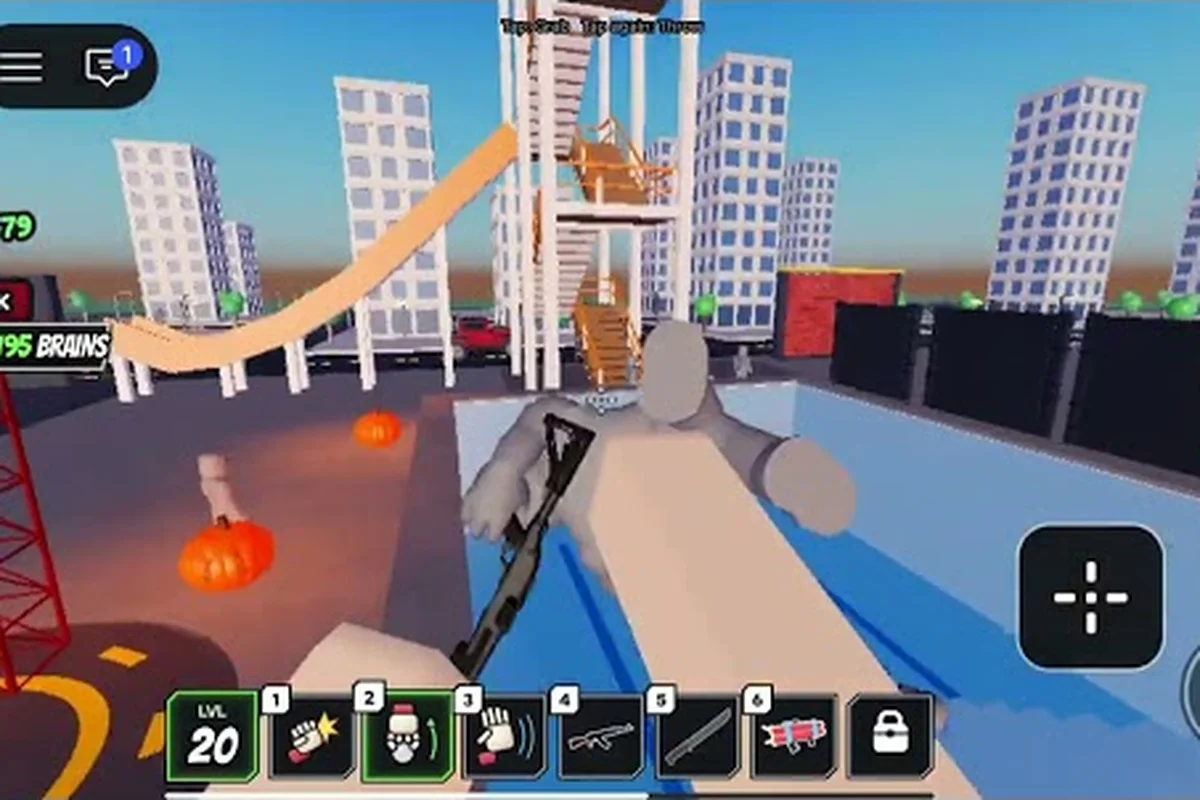
Ragdoll Reality dummy blood reveals how every impact changes a target, from bleeding and lost limbs to infection and zombie conversion. This matters because the official game page confirms that hits register where they land, making precise body targeting the key to predictable combat outcomes.
Bleeding Cues Tied to Impact Point
Ragdoll Reality dummy blood is tied to the location of an impact rather than a conventional shared health bar. According to the official Ragdoll Reality game page, a leg wound can leave a dummy limping or crawling, while an arm injury can make the injured arm hang or cause the dummy to clutch the wound. This means understanding ragdoll reality dummy wound placement is more useful than searching for a universal damage number.
The official page does not publish health totals, damage thresholds, bleeding rates, or engine settings. It instead emphasizes observable reactions: dummies can stagger, fight back, run away, recover, bleed, and lose limbs. Those details make careful observation more reliable than invented formulas, especially when a test is affected by movement, impact angle, or the dummy’s current state.
| Impact location | Expected reaction | Practical significance |
|---|---|---|
| Arm | The arm may hang, or the dummy may clutch the wound | Reduces effective reach and may interrupt a counterattack |
| Leg | The dummy may limp or crawl | Alters movement and makes pursuit easier |
| Torso | Visible bleeding and body collapse are emphasized | A central target can destabilize the dummy quickly |
| Head | Severe reaction may occur at the exact point struck | Useful for testing, but reaction can vary by situation |
| Separated limb | The body part remains physically independent | Changes the target’s effective reach and mobility |
These are location-based reactions, not published damage values. The distinction matters because two hits against the same Ragdoll Reality dummy can produce different outcomes when they land on different body parts: an arm wound may leave the limb hanging, while a leg wound can turn the dummy into a limping or crawling target. Because the game does not publish fixed health thresholds, bleeding rates, or damage formulas, comparisons should focus on observable changes in mobility, balance, pursuit, and the dummy’s ability to counterattack rather than on an invented universal number.
Reading a Dummy Wound
A wound has three observable layers in this game: the first is physical impairment, the second is visible bleeding, and the third is possible separation. A leg hit may create a ragdoll reality dummy wound that changes the way the dummy supports itself, while an arm hit may interrupt its ability to grab, block, or strike. The official description confirms that limbs can come off, but it does not state that every wound immediately becomes a dismemberment.
Community testing is useful for observing how the effects feel in practice, although reports can vary by update, server, and action. Players should treat visual reactions as reliable guidance rather than exact measurements. In particular, there is no authoritative evidence for a fixed timer, a standard blood amount, or a guaranteed Infection Threshold displayed in the interface.
The most dependable method is to isolate one variable at a time, because a ragdoll reality dummy wound can develop through several distinct stages rather than one fixed response. For example, a leg strike may produce visible blood and a limp without preventing movement, while a stronger hit to the same area may alter the dummy’s balance or cause a collapse. Comparing the struck body part, ragdoll reality dummy physics, and the subsequent infection or dismemberment state helps distinguish temporary impairment from effects that persist. This approach also avoids treating the absence of blood as proof that no wound occurred, since the game’s observable effects can vary with the impact and the dummy’s current movement.
-
Record the body part that was struck.
-
Observe whether bleeding, dangling, clutching, limping, or collapse occurs.
-
Note whether the dummy can still pursue or attack.
-
Check for separation without assuming it will happen every time.
-
Watch for a later bite or graveyard transformation if infection is relevant.
This method is more informative than repeatedly swinging because it reveals which impacts are producing meaningful changes. It also makes ragdoll reality dummy physics easier to study: the result depends on force, direction, body area, and the dummy’s movement at the moment of contact.
How Wounds Read on Each Body Area
The official game page treats each body part as a separate target. That framing means location can influence both the immediate animation and the dummy’s next action. The table below organizes the main target zones without inventing unconfirmed damage percentages.
| Target zone | Likely physical response | Mobility effect | What to observe next |
|---|---|---|---|
| Head | Collapse, bleeding, or a stronger loss of balance | Usually a major interruption | Whether the dummy regains coordination |
| Upper torso | Stagger or torso injury | Can interrupt swings and grabs | Whether it keeps pursuing |
| Forearm or hand | Arm may hang or the dummy may clutch the injury | Can reduce grip and reach | Whether it can still grab objects |
| Thigh or shin | Limp or crawl may occur | Strongly changes locomotion | Whether the injury is temporary |
| Spine or pelvis | Potentially destabilizing central impact | May prevent normal standing | Whether the body rolls or recovers |
Arm Impairment and Leg Impairment are the clearest published examples. The official page specifically says that an arm hit can leave that arm hanging, while a leg hit can produce limping or crawling. Other zones are supported by the general location-based system, but exact severity should be described as observed behavior rather than a fixed stat.
Players who want more detail on the five targeting categories can use the Ragdoll Reality dummy stumble targeting breakdown to compare the purpose of each zone. That reference helps distinguish a deliberate test of movement from a test of bleeding or dismemberment, which matters when comparing results across sessions.
Why the Exact Hit Location Matters
Location matters because the game sells a simulation of bodily consequences, not a simplified “hit, health down” exchange. A strike to the hand can interfere with grabbing, while a strike to the leg can alter the pursuit pattern. If a player throws the dummy at the same time as striking it, the resulting motion may be harder to compare because the body is already moving through a separate physical event.
For cleaner observations, begin with a stationary or slowly moving dummy. After a controlled hit, wait for the body to settle before throwing, grabbing, or applying another force. This isolates the Impact Reaction from the physics of a throw. It also gives you a better chance to distinguish bleeding from the red visual effects associated with collision or dismemberment.
The game’s published description does not list limb health, armor, or a universal hitbox value. A clean test therefore depends on consistent conditions: similar approach speed, comparable tool, and the same target region. Without those controls, a dramatic reaction may reflect the force of the entire action rather than the location alone.
Physical Damage Escalation to Blood Loss
Ragdoll Reality dummy physics are central to the injury system because limbs can detach and the remaining body continues reacting. The official page confirms that dummies can be grabbed, pushed, thrown, and dismembered. It does not provide joint limits, limb mass, gravity values, or a dismemberment threshold, so detailed numerical comparisons would be guesswork.
The practical distinction is between Impact Injury, Separated Limb, and Body Reaction. An impact injury may produce bleeding and impaired movement. A separated limb changes the dummy’s reach and balance. A body reaction is the animation produced when the remaining mass falls, twists, or catches itself. Understanding those stages prevents one dramatic event from being mislabeled as three separate wounds.
| Observation | What it indicates | Useful follow-up test |
|---|---|---|
| Blood appears without a detached body part | The target zone received a bleeding wound | Check whether the dummy protects or clutches it |
| A limb remains attached but hangs loosely | The joint may be impaired | Track whether the dummy can use that arm |
| A limb separates cleanly | Dismemberment has occurred | Compare the remaining body’s mobility |
| The body tumbles after a fall | Physics are resolving the collision | Separate the fall from any prior wound |
| A wound later affects a bitten dummy | Infection may be developing | Watch for movement and conversion changes |
Ragdoll reality dummy blood is therefore best treated as a visible consequence within a broader physical simulation. The visual result can guide experimentation, but the official material does not confirm a numerical blood pool, bleed-out timer, or fixed recovery period. Those limits are worth remembering before comparing two clips or advising a beginner to wait for a specific number of seconds.
Blood, Collision, and Severed Limbs
Blood, collision effects, and separated limbs can occur within the same chaotic sequence, so visual identification takes practice. A detached arm that strikes the ground is not automatically a fresh wound. Likewise, the moment a dummy falls may combine a prior wound with the impact of landing. The clearest evidence is a visible change beginning at the point of contact.
A useful recording strategy is to capture three clips with synchronized camera movement and matching frame timing. Start with a wide approach shot, then lock the camera on the dummy’s impact zone so blood, wound textures, and ragdoll physics remain visible, and finish with a steady recovery shot. This separation helps determine whether bleeding began at the hit point, appeared during the fall, or resulted from limb separation, while preserving the dummy’s posture changes and any visible wound response.
-
Approach clip: Shows the dummy moving before impact.
-
Impact clip: Isolates the exact hit zone and moment of contact.
-
Recovery clip: Shows whether it stands, limps, clutches an injury, or changes behavior.
This approach also supports the Ragdoll Reality guide to dismemberment techniques, especially when testing whether a swing separated a limb because of the tool, the impact point, or an accidental fall. Keep each test separate if you want a reliable comparison, because combined actions blur the cause and effect.
Dummy Infection and Zombie Conversion
Ragdoll Reality dummy infection is tied to the graveyard conversion path and bites. The official page says that throwing a dummy into the graveyard produces a zombie, and it also describes bitten dummies as infected and able to convert. The Halloween update adds three zombie speed classes: Slow, Normal, and Fast. Zombies can chase, pounce, and bite, while a Horde button starts a wave-survival mode.
| Infection-related state | Published behavior | What remains unconfirmed |
|---|---|---|
| Bitten dummy | The dummy is described as infected and can convert | Exact conversion delay |
| Graveyard contact | Throwing a dummy into the graveyard produces a zombie | Required dwell time or exact contact rule |
| Converted zombie | Can chase, pounce, and bite | Health pool and bite damage |
| Speed class | Slow, Normal, and Fast are listed | Numerical movement-speed values |
| Horde mode | A wave-survival mode begins through the Horde button | Wave size, spacing, and reward rates |
Because the game does not publish a visible infection meter, players should not expect a precise countdown on the dummy. The practical signs are behavioral: a bitten dummy becomes infected, and a body that enters the graveyard can return as a zombie. The distinction matters for planning, because a wounded dummy can become a mobile threat rather than remaining a passive training target.
When a Dummy Zombie Appears
A ragdoll reality dummy zombie can emerge through either a bite or the graveyard transformation. These routes serve different purposes. Bites introduce infection into an ongoing encounter, while the graveyard turns the aftermath of a throw into a new enemy. This gives the Halloween systems a clear relationship: dismemberment and throwing can feed directly into zombie behavior.
The official page names three speed classes, but it does not publish their numerical values. Consequently, a faster zombie should be identified by its observed movement rather than assigned a fabricated speed stat. Likewise, there is no published health total, bite-damage value, or wave population in the available data. Community reports may help with practical expectations, but they do not override the official description.
If infection appears during a horde, the safest response is to create distance, redirect attention toward the moving zombie, and avoid letting a damaged dummy remain beside your path. A stationary or badly impaired target may look harmless while a converted one can pursue, pounce, or bite. The change in behavior is more important than the presence of blood alone.
For a broader view of the enemies that can occupy the same maps, consult the complete breakdown of dummies and their reactions. That comparison can help separate ordinary dummy behavior from the distinct movement and attack patterns associated with converted zombies.
Dummy Tower Fall and Physics Experiments
A ragdoll reality dummy tower fall is one of the clearest demonstrations of the game’s physical model. Instead of asking whether a single hit deals enough damage, this scenario reveals how a stack reacts when its supports are removed, when a body lands on another body, and when a limb becomes a separate collision object. The tower is useful because the result emerges from many small physical events.
No official height, floor material, gravity, or damage formula is published for tower falls. The official material confirms that dummies can be pushed, thrown, and dismembered, but it does not claim that a particular tower height causes instant defeat. Any guide that promises a fixed height threshold would go beyond the available evidence.
| Tower-test variable | Controlled option | Reason it matters |
|---|---|---|
| Dummy count | Change one at a time | Prevents mass collisions from obscuring the first reaction |
| Stack height | Add one level between tests | Makes the cause of the collapse easier to identify |
| Support location | Remove a lower or upper point | Changes how the stack rotates and collapses |
| Body position | Keep limbs oriented consistently | Reduces variation between drops |
| Contact area | Use a clear landing area | Makes the result easier to record |
| Injury state | Test healthy and wounded bodies separately | Shows whether an existing injury changes the fall |
For a controlled test, build a short stack, mark the dummy you intend to remove, and record the setup before pulling the support. If a body begins bleeding before the collapse, keep that event separate from the tower fall. Otherwise, you may incorrectly attribute blood to the landing when it actually came from an earlier wound.
Structuring a Fall Test for Bleeding
A repeatable test needs fewer variables than many players assume. You do not need to recreate a professional laboratory; you simply need a clear landing zone, the same construction pattern, and a consistent way of removing support. The goal is comparison, not a fabricated precision score.
-
Place one dummy on a flat surface and record its resting state.
-
Build a small stack using the same body orientation each time.
-
Remove one clearly identified support point.
-
Record the first visible wound, the first separated limb, and the final resting position.
-
Repeat before changing height, body count, or removal point.
Ragdoll reality dummy physics can look chaotic, but a controlled setup makes cause and effect much easier to read. The collision chain matters: an upper dummy may strike a lower one, a detached limb may redirect the body, and the final landing may differ from the first impact. Three simple recordings—initial state, removal action, and aftermath—offer more reliable evidence than a single continuous clip.
The limb tactics for knocking out dummies can help when the goal is to interrupt a target before it moves. Combining that focus with a fixed tower layout helps isolate movement reduction from the separate effects of a collapse.
Blood Reaction Test Scenarios
Reliable testing depends on controlling the dummy, the impact, and the recording. Start with one target, one body zone, and one action. After the first test, record the observable result, then change only one variable. This method is especially important for ragdoll reality dummy blood because the game emphasizes physical reactions rather than published stat calculations.
A compact test log gives more value than a long session without notes. Record the target zone, action, visible response, and later state. If the dummy begins bleeding, note whether it also clutches the injury. If it loses a limb, record whether the remaining body can still move. If it is bitten, track the transition toward a zombie without assuming an exact timer.
| Test goal | Best initial action | Key evidence to record | Unsupported claim to avoid |
|---|---|---|---|
| Compare wounds | Hit different body zones on separate dummies | Clutching, dangling, limping, or collapse | Exact health loss by zone |
| Test bleeding | Apply one controlled impact | Blood at the contact point | A fixed bleed-out time |
| Test dismemberment | Use a consistent swing and target | Whether a limb detaches | A guaranteed separation rate |
| Test infection | Arrange a bite in a controlled area | Infected behavior or conversion | A published conversion countdown |
| Test a tower fall | Change one stack variable | Collapse order and final positions | A safe or lethal tower height |
| Test physics | Film approach, impact, and recovery | Body orientation and motion | Unpublished mass or gravity values |
The Single-Variable Rule is the most useful experimental habit. Change the target zone, but not the weapon and speed. Then change the weapon, but keep the target and action similar. This makes the results easier to interpret and reduces the temptation to treat visual intensity as a precise damage meter.
Bleeding Test Pitfalls
The most common mistake is combining several actions. A thrown dummy that is struck in midair, lands on another body, and loses a limb offers too many variables to identify the cause. Another mistake is assuming that every zombie speed class has a published numeric speed. There is also a tendency to treat a red mark after a collision as blood without checking whether it begins at the point where the wound was received.
Pre-contact, contact, and post-contact are useful labels for video review. Pre-contact shows the dummy’s balance and intended motion. Contact identifies the target zone and force direction. Post-contact reveals bleeding, clutching, dismemberment, and recovery. This three-stage method works for both single hits and tower falls.
The official game page remains the best authority for what is known: location-based reactions, blood, limb separation, graveyard conversion, bites, and three named zombie speed classes. As of the official information verified on October 25, 2026, there are no published figures for wound thresholds, blood volume, infection timing, zombie health, bite damage, gravity, or tower height. Staying within those limits makes the guide more accurate and more useful.
Dummy Blood Summary
Ragdoll Reality dummy blood is a visible part of a location-based injury system: a hit can bleed, impair a limb, cause dismemberment, and eventually connect with infection or zombie conversion. The strongest approach is to test one body area at a time, record the impact and recovery, and separate published mechanics from community observation. That method makes ragdoll reality dummy wound reactions, ragdoll reality dummy infection, and ragdoll reality dummy tower fall results easier to compare without relying on unsupported numbers.
Frequently Asked Questions
Does Ragdoll Reality dummy blood have a fixed damage value?
No fixed blood volume, damage value, or bleed-out timer is published. Ragdoll Reality emphasizes location-based reactions instead, so a leg injury may cause limping while an arm injury may make the arm hang. The safest method is to record the target zone, visible blood, and the dummy’s recovery behavior rather than assuming a numerical threshold.
Can every wound cause a limb to separate?
No. The official game page confirms that limbs can come off, but it does not say every wound causes dismemberment. A hit may leave a wound without immediate separation, while forceful or combined interactions can produce different outcomes. Keep the action consistent when testing and separate direct impacts from falls or collisions.
How does a Ragdoll Reality dummy infection begin?
A bitten dummy is described as infected and able to convert. The graveyard also provides another conversion path because throwing a dummy into it produces a zombie. Exact conversion timing is not published, so watch for changes in behavior rather than expecting a visible countdown or fixed number of seconds.
What are the three zombie speed classes?
The official game page lists Slow, Normal, and Fast zombie classes. These zombies can chase, pounce, and bite, but numerical speed, health, and bite-damage values are not published. Their practical difference is best observed during movement and pursuit, particularly in Horde mode where multiple converted dummies can chase at once.
Does a Ragdoll Reality dummy tower fall always cause a wound?
No guaranteed result is documented for a specific tower height. A fall may produce bleeding, impaired movement, or dismemberment, but the outcome depends on the setup and physical collision chain. Mark the support you remove, change one stack variable at a time, and record whether the first wound occurs before contact or after landing.