
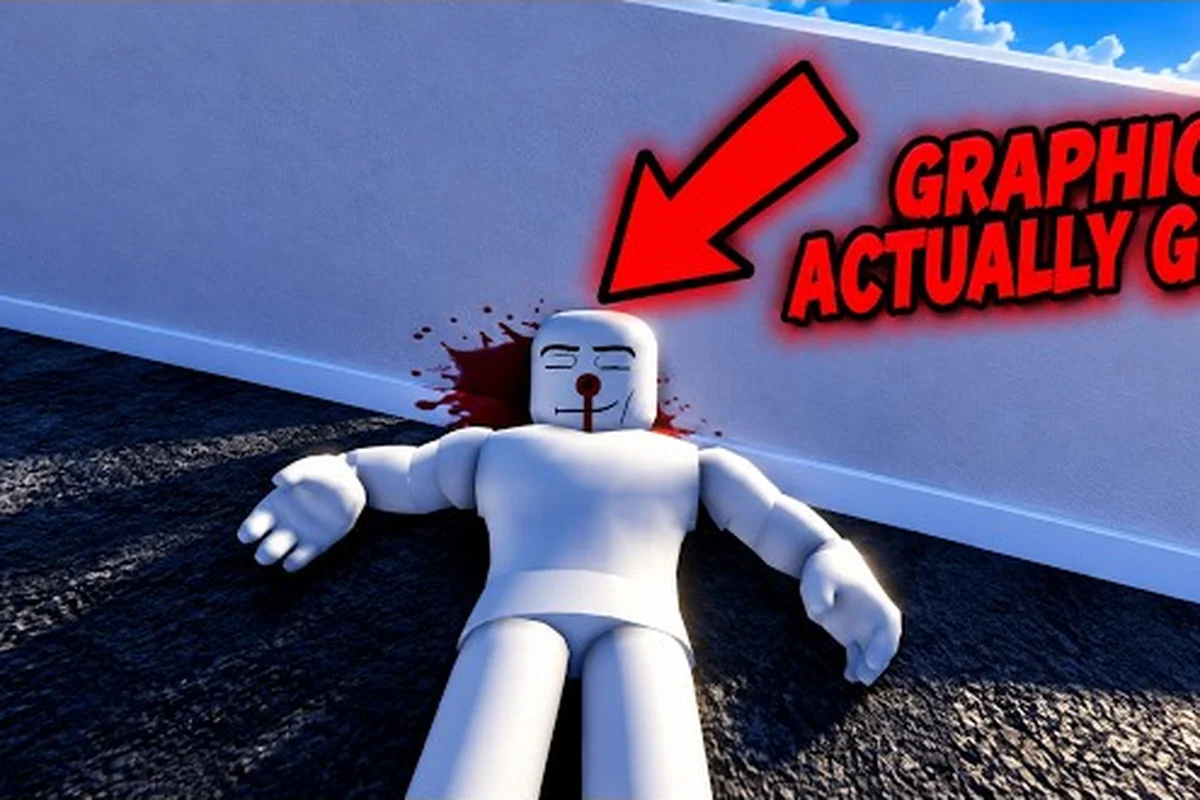
Ragdoll Reality gameplay tips matter because this physics sandbox rewards deliberate positioning, precise impacts, and smart testing rather than mindless button mashing. Learn the core loop, turn short sessions into meaningful experiments, and make every hit teach you something. For example, treat each obstacle as a controlled physics test: change only one variable—such as approach speed, body angle, or launch point—between attempts, then note how the ragdoll’s momentum and joint rotation affect the collision. This makes short sessions more useful, reveals whether a failure came from poor timing or the setup itself, and helps you improve the sandbox’s learning curve one reproducible hit at a time.
Gameplay Tips for a Strong First Session
A productive Ragdoll Reality session starts with a simple test: choose a dummy, select a weapon, and observe exactly where the hit lands. Because the official Ragdoll Reality game page describes location-based reactions, a leg strike, an arm strike, and a torso strike can produce noticeably different movement. That visible cause and effect is the foundation for every useful Ragdoll Reality gameplay tips routine.
Start with controlled movement and an ordinary dummy before testing more dangerous locations. Walk close, swing or fire at a measured target, and watch how the body responds. If the result feels inconsistent, change only one variable: distance, weapon, aim point, or swing speed. This simple method makes the physics easier to learn and prevents a chaotic scene from hiding the lesson you were trying to discover.
A repeatable first-session loop
Treat each new experiment as a controlled ragdoll-physics test: first establish a stable setup, then introduce only one change. For example, if a thrown object is producing unpredictable momentum transfer, reset the dummy, weapon, impact point, and distance before testing a different force or mass. This isolates whether the effect comes from the weapon’s hitbox, the ragdoll joint behavior, or the environment, making later comparisons between Ragdoll Reality sandbox scenarios more reliable and easier to reproduce.
-
Choose one dummy so the result is easy to evaluate.
-
Pick a familiar weapon that lets you focus on the dummy's reaction.
-
Test at two distances, keeping the same target area.
-
Record the outcome, including whether the dummy staggered, fled, or recovered.
-
Change one factor before repeating the test.
-
Graduate to hazards only after basic hits feel predictable.
This loop also makes Ragdoll Reality how to have fun answers practical rather than generic. Instead of asking only what can break, define the behavior you want to test—for example, whether a heavier weapon produces stronger ragdoll joint rotation or merely a faster launch—then keep the dummy, impact point, distance, and force fixed while changing one variable. Comparing those results helps you identify whether the difference comes from weapon mass, momentum transfer, joint constraints, or the environment, giving each sandbox experiment a clearer purpose and a more useful conclusion.
What to observe during every impact
| Observation | What it teaches you | Better next test |
|---|---|---|
| Contact point | Which body areas react differently | Aim at the arm, leg, and torso |
| Distance | How much travel time affects the hit | Repeat at near and medium range |
| Follow-through | Whether momentum carries the dummy | Use a slower, more deliberate swing |
| Recovery | Whether the dummy returns to action | Observe the same hit twice |
| Nearby hazards | How the arena changes the outcome | Move into the playground area |
If you are still learning the basic controls, the Ragdoll Reality getting-started guide can help you establish a clean foundation before experimenting with more complicated setups. For example, learn how to select a grabbable body part, apply force without instantly overdriving the ragdoll, and adjust the angle of impact before testing the arm, leg, and torso hits listed above. That control makes each observation easier to interpret: if the dummy reacts differently, you can tell whether the cause came from the contact point, swing speed, nearby hazards, or recovery timing rather than from an accidental control mistake.
Learning Curve: Read the Body's Reaction
The Ragdoll Reality learning curve is mostly about observation. Dummies can stagger, retaliate, retreat and rise again, according to the official game page. Their limbs can also detach, while wounds may bleed. These features make the sandbox expressive, but they also mean that a successful hit is not always the end of an encounter. The next important skill is watching what the body does after contact.
Match the target area to your goal
Different impact locations create different opportunities. A torso hit may interrupt a dummy more decisively, while an arm hit can leave that limb hanging and make the dummy clutch the wound. Leg impacts can make it limp or crawl. These effects give you several ways to solve the same encounter without relying on a single attack pattern.
| Target area | Likely physical response | Practical use |
|---|---|---|
| Torso | Strong interruption and stagger | Gain time or stop an advancing dummy |
| Arm | Hanging limb and clutching behavior | Disrupt an attack and observe the reaction |
| Leg | Limping or crawling movement | Slow movement and create distance |
| Head or upper body | Reaction varies by impact and physics | Test high-control swings at close range |
| Detached limb | Permanent change to the body model | Test follow-through and weapon range |
Do not treat these as guaranteed damage numbers. The official page does not publish precise health, damage, or limb values, and observed outcomes can vary with force and contact. The useful rule is to test consistently: if the same placement produces the same result, you can use it deliberately.
Turn accidental chaos into a controlled experiment
A ragdoll can travel farther than expected because force, direction, nearby objects, and the dummy’s current pose all influence the result. When an impact sends a target somewhere unexpected, repeat it near the same starting position before drawing a conclusion. Move the dummy back, stand in the same place, and repeat the swing with the same weapon.
This is where Ragdoll Reality gameplay tips become more than a list of button instructions. They train observation. You begin noticing how a horizontal strike differs from a downward one, how a close impact gives you less reaction time, and how the target's posture changes its path.
The same practice applies when selecting equipment. A broader overview of Ragdoll Reality weapons can help you identify tools for different experiments, but choosing the strongest-looking option is not always the best choice. A predictable weapon often teaches more than a powerful one.
Sandbox Guide: Choose Goals Beyond Breaking Dummies
A sandbox is most satisfying when you give each location a purpose. The official game page highlights playground hazards, an 80-stud tower, a graveyard, and a Horde button. Those features support several different goals: testing physics, experimenting with zombies, surviving a wave, or seeing how far a body can travel. This makes the best Ragdoll Reality sandbox guide less about imposing a single difficulty route and more about choosing an experiment that matches your current skill.
Match activities to your current objective
| Objective | Best area or feature | What to practice |
|---|---|---|
| Learn weapon handling | Open dummy area | Contact point, distance, and recovery |
| Test chain reactions | Playground hazards | Setup, trigger, and safe positioning |
| Measure vertical reach | 80-stud tower | Recovery, falling, and impact control |
| Test conversion behavior | Graveyard | Throwing a dummy into the conversion area |
| Practice survival | Horde mode | Spacing, target selection, and quick resets |
The graveyard adds a distinct Halloween mechanic: throwing a dummy into it creates a zombie. The official page identifies slow, normal, and fast zombie classes, and says these enemies chase, pounce, and bite. A bitten dummy becomes infected and can convert, so approaching the graveyard casually may produce a chain reaction that quickly overwhelms the original test.
Plan for that possibility. Keep a clear escape route, avoid throwing a dummy near an active group, and observe how the infected state develops before bringing more targets into range. The first-hour plan for Ragdoll Reality can help you divide objectives into manageable stages.
Build small challenges for yourself
A challenge turns random play into a repeatable goal by defining success, a time limit, and a movement constraint. For example, require a dummy to land within one meter of a marked zone after a shoulder throw, or count only ragdoll impacts that exceed a specific force threshold. Tracking those variables in the sandbox lets you compare attempts, identify wasted momentum, and refine the next setup without relying on vague impressions.
-
Knock a dummy down using only leg impacts.
-
Reach the top of the tower without making contact with a target.
-
Trigger a hazard with the smallest possible swing.
-
Convert one dummy, then avoid infection from the resulting zombie.
-
Survive the Horde while changing weapons only between waves.
-
Keep a target inside a chosen area for five seconds.
These objectives are flexible, but they make experiments measurable. For example, set a 30-second window to knock a dummy down with only leg impacts, then compare the number of throws, travel distance, and final position against a shoulder-throw test. A successful attempt brings the ragdoll closer to the marked zone, produces a faster zombie reaction, or triggers the hazard with less wasted momentum. Recording those variables reveals whether the change came from better timing, stronger force, or more efficient body positioning, giving you a clear basis for the next sandbox setup.
How to Have Fun: Experiment With Cause and Effect
Ragdoll Reality how to have fun begins with curiosity rather than optimization. The official page had recorded roughly 55,700 concurrent players, about 9.55 million visits, and 34,700 favorites as of October 25, 2026. That scale suggests many different approaches are possible, even though the server was listed as single-player with a maximum of one player and no VIP servers enabled. Your session can therefore be a personal laboratory without requiring a teammate.
The most entertaining approach is to give a harmless goal a strange constraint. Instead of trying to defeat a dummy normally, try to launch it with a weapon you do not normally use. Instead of running straight through the Horde, try to preserve distance. Instead of ignoring the tower, test which landing creates the most interesting recovery.
Three activity styles worth trying
Precision testing rewards clean contact points, making it useful for isolating weapon handling from the chaos of the sandbox. Pick one target area, hit it twice from the same distance, and keep the camera angle and body position unchanged; a sharper first contact followed by a delayed tumble can reveal how impulse and ragdoll physics affect the result. Repeating the test at a shorter range adds a useful comparison: if the reaction changes, the difference likely comes from impact speed or contact timing rather than the target itself. This makes precision testing a practical way to learn why a clean hit sometimes produces a different outcome than a slightly offset strike.
Chain-reaction testing uses the environment as the main tool. Position a dummy near a hazard, make a controlled impact, and observe what the environment contributes. Because force can send bodies in unexpected directions, set up every attempt from the same position before comparing outcomes.
Survival scenarios test decisions under pressure. The Horde button starts a wave-oriented mode, although the official page does not publish exact wave counts, zombie health, or bite damage. Treat those numbers as unknown and focus on spacing, target priority, and whether retreating creates safer openings.
Players report experimenting with the sandbox in different ways, so these activities do not require a single “correct” route. A practical method is to change one variable per test: for example, keep the same dummy, impact distance, and camera angle while altering only the timing or location of contact. If the ragdoll’s response changes, impulse transfer, contact timing, or collision timing is likely responsible. Because the sandbox does not publish fixed wave counts, zombie health, or bite-damage values, compare visible outcomes—distance traveled, stagger direction, and recovery time—rather than assuming an exact number, then repeat the test to make the next run more informative than the last.
Practical Gameplay Tips for Faster Improvement
The fastest way to improve is to reduce randomness. Pick a clear target, reduce unnecessary movement, and let one variable change between attempts. This approach improves your sense of timing while keeping the test useful. It also reveals which weapon and location combinations work for you instead of leaving you with a collection of random victories.
Diagnose a weak result quickly
| Result | Likely problem | Corrective action |
|---|---|---|
| The dummy barely reacts | Contact area or force was too weak | Move closer or change the weapon |
| The target flies too far | Excess force or poor recovery | Slow down and practice follow-through |
| The swing misses repeatedly | Tracking or camera alignment | Pause, reset, and choose a larger body area |
| Results change every attempt | Too many variables changed | Repeat the original test unchanged |
| A zombie becomes difficult | Conversion happened near other targets | Create distance and use a safer test area |
| The scene becomes overwhelming | Multiple hazards and targets overlap | Clear one condition at a time |
Resist changing weapons, distance, and aim point together. If an attempt fails, that failure still contains information when the variables are stable. It may reveal that the weapon needs more room, that the target area was unsuitable, or that your recovery timing was late.
Prepare a better test area
Before moving into a complex area, identify three useful conditions: enough space to trigger a target’s ragdoll without pushing it into scenery, a stable viewpoint for observing momentum, and room to recover from a recoil-driven collision. For example, test a pistol shot beside an open wall first, then repeat it near a narrow doorway; the same projectile may carry a body into a hard surface and change the subsequent tumble. This isolates aiming, ragdoll activation, and impact physics so you can improve the sandbox without confusing positioning mistakes with weapon behavior.
-
A clear approach that lets you reach the target without crossing hazards.
-
A visible impact zone where you can judge contact and body movement.
-
An escape direction that remains open even when a target is knocked backward.
This preparation matters because the game is a physics sandbox, and the same action can produce different results depending on the surroundings. Keep early tests uncomplicated. Once the basic response feels familiar, add a tower, a hazard, a zombie, or a second target.
If a weapon is creating inconsistent results, the Ragdoll Reality pistol guide offers a focused example of testing aim, range, and reaction separately. Weapon-specific practice is more efficient than trying to master every option at once.
Frequently Asked Questions
What are the best Ragdoll Reality gameplay tips for beginners?
Begin by choosing one dummy and one weapon, then repeat the same impact from the same distance. Watch how the contact point changes the reaction, vary only one factor at a time, and record whether the target staggers, limps, crawls, fights back, or recovers. This method turns the sandbox into a controlled practice area instead of a series of random outcomes.
How can I have fun in Ragdoll Reality without relying on a fixed objective?
Give yourself a small experimental challenge, such as keeping a dummy inside a marked area, landing a leg hit, or triggering a playground hazard with minimal movement. The official page lists playgrounds, an 80-stud tower, a graveyard, and Horde mode, so you can rotate between precision tests, environmental reactions, zombie conversion experiments, and survival attempts as your interests change.
What should I know about the Ragdoll Reality learning curve?
Expect the first few sessions to involve basic positioning, weapon range, and impact recovery. Dummies can stagger, fight back, run away, and rise again, while limb damage can change their movement. Practice one target and one variable at a time, because changing distance, weapon, and aim simultaneously makes it difficult to identify what actually caused the result.
Is the graveyard safe for a beginner in Ragdoll Reality?
Treat it as a controlled but risky area. The official page states that throwing a dummy into the graveyard creates a zombie, and that bitten dummies can become infected and convert. Start with one target, keep a clear escape route, and avoid bringing extra dummies nearby unless you deliberately want to test a larger chain reaction.
Does Ragdoll Reality support private or co-op servers?
The official Roblox page listed the game as single-player, with a maximum player count of one and no VIP servers enabled as of October 25, 2026. That means you should plan the current experience around individual sandbox challenges rather than relying on a private server or co-op partner, and verify the official page if server options may have changed.
Ragdoll Reality rewards observation, controlled repetition, and creative goals. Master one weapon, one target area, and one location before adding hazards or zombies; track what changes, preserve your best test conditions, and turn each successful impact into a new question worth testing.