
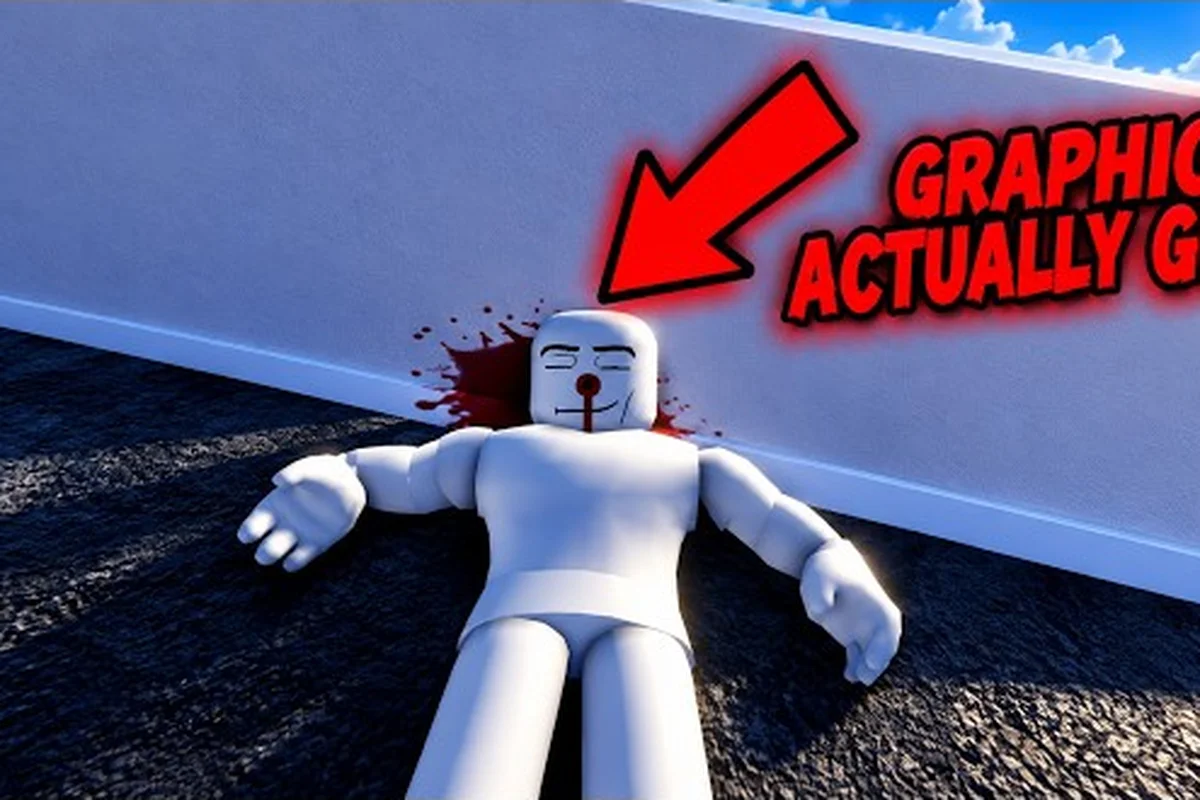
Ragdoll Reality like and favorite details matter because they reveal how the developer expects players to receive news about updates. The game launched on 13 October 2026 and promises weekly changes, so this guide explains what is confirmed and how to follow updates reliably.
Like and Favorite Purpose and Launch Facts
The official Ragdoll Reality game page asks players to like and favorite the experience so they can receive notifications about future changes. This is a simple platform action, but it also serves as a practical way to follow updates without relying on unverified release calendars.
Ragdoll Reality was created by the Roblox group I am eating. Its official creation date was 13 October 2026, which is the verified answer to the question of when the game was released. The Halloween update arrived as part of the experience's early development, adding graveyard conversion, several zombie classes, infection, and a Horde mode.
The game is a physics sandbox, and its public server configuration listed a one-player maximum as of 25 October 2026. There was no co-op or private-server option in the captured data. Those limitations matter when interpreting early feedback because each visitor was experiencing the sandbox individually rather than coordinating with a regular multiplayer group.
| Verified fact | What the official game page showed | Practical meaning |
|---|---|---|
| Creation and launch date | 13 October 2026 | The game was still in its opening phase when the Halloween content appeared |
| Public visits | About 9.55 million | Interest was already substantial despite the short age of the title |
| Concurrent players | About 55,700 | The sandbox had a sizeable live audience |
| Favourites | About 34,700 | Many players had already bookmarked the experience |
| Likes and dislikes | About 9,761 and 2,142 | The displayed ratio was strongly favorable |
| Server capacity | 1 player | Early sessions were not designed as cooperative matches |
| Stated update cadence | Weekly | The developer publicly promised recurring work |
Liking and favoriting are therefore best treated as notification signals, not a formal subscription system. Roblox can surface relevant page changes to users who interact with the listing, but the exact timing and presentation of a notification may vary. The developer’s wording supports watching the page, while the game’s own update history remains limited.
Follow Updates Through the Official Page
The most reliable way to Ragdoll Reality follow updates is to use the official listing as the source of truth. A player can open the game page, interact with the like and favorite controls, and then check the page for announcements. This approach is more dependable than an invented schedule because the developer has not published a detailed changelog archive, version numbering scheme, or dated patch archive.
This limitation makes the Ragdoll Reality update time less precise than many players may expect. “Weekly” describes the intended cadence, but it does not identify a particular weekday, hour, or release slot. A new build may also arrive without a detailed change list, so users should distinguish between the public update promise and a guaranteed timetable.
| Tracking method | Reliability | Best use | Main limitation |
|---|---|---|---|
| Official Roblox game page | High | Announcements and current listing details | No complete public changelog archive |
| Like and favorite actions | High for alerts | Following the listing from Roblox | Notification delivery is not time-specific |
| In-game changes | High for current behavior | Confirming which features are live | May not explain when a change landed |
| Community reports | Medium | Early player impressions | Unconfirmed details can spread quickly |
| Third-party update calendars | Low without confirmation | Broad monitoring only | Dates may be predictions rather than announcements |
The official page also serves as a practical baseline. A player can compare the current list of Halloween additions with the Ragdoll Reality update summary to determine whether a new feature is part of the established release rather than a rumored addition.
The developer’s weekly promise should also be interpreted carefully. Weekly content can mean a new feature, balance adjustment, bug fix, visual change, or combination of these. Without version numbers and dated patch notes, it is impossible to prove from the public listing alone that every change arrived on a strict seven-day cycle. The useful takeaway is that the studio intends to keep working on the game, not that a particular update is guaranteed at a specific hour.
Update Time and Weekly Cadence
The verified Ragdoll Reality update time is not a fixed daily or hourly release. The official page states that updates occur weekly, yet the listing does not publish a dependable release clock. Players seeking current details should check the page after the normal weekly window, especially when an announced event or seasonal feature is approaching.
The distinction between an update time and an update frequency is important. The Ragdoll Reality how often updated answer is weekly, according to the developer, while the precise moment of delivery remains unspecified. That means a player who expects a new version every Monday afternoon may be relying on information the developer has never provided.
Reading a weekly cycle correctly
A practical monitoring cycle has three parts: notice the official announcement, enter the game to test the current build, and record what differs from the previous session. Because the official page has no version archive, personal notes are often more useful than trying to reconstruct the entire Ragdoll Reality update history from scattered community posts.
| Stage | What to check | Why it matters |
|---|---|---|
| Before the expected window | Official page announcements and community reports | Helps identify the intended theme or feature |
| Immediately after a build | New interface options, Horde behavior, and conversion systems | Confirms what is actually live |
| During the next session | Stability, enemy behavior, and weapon interactions | Reveals balance changes that announcements may omit |
| End of the weekly window | Official listing and creator social channels | Helps identify corrections or follow-up changes |
The Halloween release demonstrates why direct testing matters. The graveyard became a conversion point, and a thrown dummy could become a zombie. The update introduced slow, normal, and fast zombie classes, plus behavior involving chasing, pouncing, biting, and infection. A Horde button started a wave-survival scenario, although the official page did not publish exact zombie health, bite damage, or wave population.
These unknowns should be labeled clearly. It is accurate to report the existence of the three classes and the Horde mode, but it is not accurate to invent a damage formula or claim that a new wave count follows a fixed pattern. A player’s own observations can be reported as current-session evidence rather than permanent mechanics.
Reading the Weekly Promise Correctly
Weekly does not necessarily mean every update is large. A smaller release may adjust the number of enemies, refine a weapon, fix a visual glitch, or improve the conversion flow. It also does not mean development is finished, because a new release can change systems that players have already learned. Those details can be compared with the dedicated Ragdoll Reality Horde update analysis.
Game Created Date and Early Development Record
The official creation date establishes the starting point for the available update record. Ragdoll Reality launched on 13 October 2026, and by 25 October the official page was already advertising Halloween content and a weekly update promise. This is a short development window, so early announcements and player testing are especially important to the project’s current state.
The public figures also show that the game was not a low-interest experiment. Approximately 9.55 million visits, 55,700 concurrent players, and 34,700 favorites suggest broad discovery on Roblox. Even with a strong audience, individual feedback may be temporary because the listed server was single-player and no private sessions were available at the time of capture.
| Milestone | Verified date or status | Interpretation |
|---|---|---|
| Game creation | 13 October 2026 | Beginning of the public release record |
| Halloween expansion | Available by 25 October 2026 | The first major feature package included zombie mechanics |
| Weekly update promise | Stated on the official page | Long-term cadence was public, but exact hours were absent |
| Version archive | Not available | Players cannot browse numbered releases or dated patch entries |
| Current public listing | 13 October creation, weekly promise, Halloween systems | Best available official reference point |
The short timeline should temper comparisons with older Roblox games. It is reasonable to expect menus, balance, and mode rules to change quickly. It is also reasonable for player reports to conflict when they describe different build dates. When comparing reports, include the session date and note whether the observation came from the official page or hands-on testing.
For a more granular view of the first feature package, the Ragdoll Reality patch notes breakdown separates the confirmed Halloween additions from unresolved questions. That distinction matters because an official description can establish that a system exists without revealing every numerical parameter or hidden behavior.
Update History and Halloween Features
The clearest documented part of the Ragdoll Reality update history is the Halloween expansion. In the graveyard, a dummy could be thrown into a conversion area to become a zombie. The game presented slow, normal, and fast classes, and the enemies could chase, pounce, and bite. A bitten dummy became infected and could itself convert others, creating a chain of interaction rather than a simple target-shooting exercise.
| Halloween element | Official description | Player-facing effect |
|---|---|---|
| Graveyard conversion | Throwing a dummy into the graveyard converts it | Players can create enemies instead of waiting for spawns |
| Slow zombie class | One of three named speed classes | Slower pursuit creates a different threat profile |
| Normal zombie class | Middle speed category | Serves as the baseline among the three classes |
| Fast zombie class | Highest named speed category | Increases pressure and reduces reaction time |
| Infection | A bitten dummy becomes infected and can convert others | Status effects can spread through the sandbox |
| Horde mode | Activated with a Horde button | Changes the focus from individual experiments to wave survival |
| Wave survival | Zombies pursue and attack during the mode | Prioritizes crowd control and positioning |
The important limitation is that the official information did not specify zombie health, bite damage, exact wave sizes, or a full damage table. Community testing can provide observations, but they should be labeled as player reports and checked against the current build. Because the game is updated frequently, a tactic observed in one session may not remain accurate in the next.
The Ragdoll Reality Roblox guide is useful for understanding the surrounding sandbox controls, while the update record should remain focused on what changed. Keeping those topics separate prevents a basic movement or weapon tutorial from being mistaken for a verified changelog entry.
Practical Checklist for Following Future Changes
Reliable update tracking requires three habits: use the official page, test the live game, and distinguish published facts from player interpretation. Liking and favoriting the experience is a useful first step because the developer specifically mentions those actions when asking the community to follow future changes, but it does not replace a visit to the current listing.
Before and after the weekly window
Players can build a simple checklist based on the official material. The goal is not to predict every hidden change; it is to notice meaningful differences quickly and avoid treating speculation as an announcement.
- Like and favorite the official game page.
- Check the page description for an updated announcement.
- Review recent community reports for unconfirmed issues, marking them as unofficial.
- Launch the latest build and test the graveyard conversion flow.
- Compare slow, normal, and fast zombie behavior.
- Try Horde mode and note changes in enemy pressure.
- Test infection and whether conversion still follows the expected chain.
- Save concise notes with the date and version context.
- Avoid sharing exact update times unless the developer publishes them.
This routine is especially effective because the game is a single-player sandbox. Each session can test the same sequence without coordinating a group, and any change in enemy movement, conversion results, or wave behavior is easier to compare with a previous note. The developer’s weekly plan gives the routine a regular trigger even though the delivery hour remains unknown.
Distinguishing evidence levels
Claims should be grouped by their reliability. Official page data supports statements about the launch date, Halloween features, player counts, server capacity, and the weekly update promise. Player experience can support observations about responsiveness, difficulty, or specific encounters on a stated date. Neither category should be used to fabricate a future roadmap.
| Claim type | Example | Appropriate wording |
|---|---|---|
| Official fact | The game launched on 13 October 2026 | “The official game page lists 13 October 2026 as the creation date.” |
| Official feature | Graveyard conversion exists | “The Halloween update includes a graveyard conversion mechanic.” |
| Player observation | A fast zombie appears difficult to catch | “Community testing on this build reported aggressive fast-zombie behavior.” |
| Unconfirmed theory | Weekly updates always arrive on Friday | “The developer promises weekly updates, but no specific release day is published.” |
| Unsupported claim | A particular code system exists | “The official page lists no code-redemption system as of 25 October 2026.” |
A final check of the official listing also helps prevent confusion around badges and codes. The captured data showed no code-redemption system and returned an empty badge list. This does not prevent the game from adding such features later, but it means players should not treat old reward-code posts as authoritative.
Frequently Asked Questions
When was Ragdoll Reality created?
Ragdoll Reality was created on 13 October 2026, according to the official Roblox game page. That same date serves as its public launch date. The project reached its Halloween feature phase quickly, so early build observations may differ from later releases. Checking the current listing is the best way to confirm the latest status.
Does favoriting Ragdoll Reality guarantee update notifications?
Favoriting helps Roblox recognize the game as a game you want to follow, but it does not create a guaranteed schedule or formal subscription feed. The developer asks players to like and favorite the experience, so those actions support notifications, while the page itself remains the most reliable source for announcements. Exact notification timing may vary by account and platform.
How often does Ragdoll Reality update?
The developer says the game receives weekly updates, which makes weekly the confirmed update cadence. No dependable release hour or weekday has been published, and the public listing has no version-number archive. Players should use the official page as the source of truth and treat precise update-time predictions as unconfirmed.
Does liking a game make you an early-access tester?
Liking or favoriting a Roblox experience does not automatically grant early-access status. It can help you follow the listing and potentially receive relevant notifications, but access and testing eligibility depend on the developer. At present, the public game listing states that it is a single-player sandbox and does not advertise a separate early-access program.
Can I review the full Ragdoll Reality update history?
A complete official changelog is not currently available because the game page provides no dated patch archive or version list. The documented history starts with the 13 October 2026 launch and includes the Halloween expansion with graveyard conversion, three zombie speed classes, infection, and Horde mode. Personal session notes and carefully labeled community reports can fill gaps without being presented as official records.